
Mobile apps stopped being nice-to-have a while ago. Customers expect to book, order, track, and pay from their phones, and they won’t wait around for you to catch up. The catch is that a good app needs specialized skills, and building an in-house team takes time and money most businesses would rather not spend.
So plenty of companies start looking abroad. Offshore development can lower costs, widen your talent pool, and let you scale a team up or down quickly. It can also go wrong, through time-zone gaps, patchy quality, or security worries. The better question isn’t “does offshore work?” but “does it work for us?”
What Is Offshore Mobile App Development?
It means hiring a software company or development team in another country to design, build, test, and maintain your app. You don’t recruit locally. You work with an outside team over video calls, project tools, and regular milestone reviews. They run their own office and processes, and you keep ownership of the product and its direction.
There are three ways to set this up. Onshore teams are in your own country. Nearshore teams are in a neighboring country, usually within a few hours of your time zone. Offshore teams are farther away, often with a big time difference. Each one trades off cost, convenience, and control a little differently.
Why Do Businesses Choose Offshore Mobile App Development?
Access to Global Development Talent
Local hiring can be slow, and good mobile developers are hard to find. An offshore partner gives you experienced iOS, Android, and cross-platform developers without a months-long search.
Potential Cost Savings
Rates in many offshore regions are lower than in North America or Western Europe. But don’t pick a team on hourly rate alone. A cheap team that ships buggy code or misses deadlines can end up costing more than a pricier, reliable one. Look at the total cost, including rework, your own management time, and maintenance.
Flexible Team Scaling
Need two extra developers for a launch, then fewer once things settle? That’s much easier with an outside partner than with permanent hires.
Focus on Core Business Activities
If someone else handles the engineering, your own people can stay on operations, customers, and strategy instead of sprint planning and recruiting.
What Types of Mobile Apps Can Be Developed Offshore?
Almost any kind, as long as your requirements are clear and the team has relevant experience.
Native Mobile Applications
Native apps are built separately for iOS (Swift) and Android (Kotlin). They give you the best performance and the fullest access to device features.
Cross-Platform Mobile Applications
Flutter and React Native let a team build one codebase for both platforms, which usually means lower cost and a faster launch.
Business-Specific Mobile Applications
Offshore teams regularly build e-commerce, healthcare, fintech, logistics, and internal business apps. If you’re in a regulated industry, check the partner’s compliance experience carefully.
What Are the Challenges of Offshore Mobile App Development?
Communication and Time-Zone Differences
When your team is many hours ahead or behind, feedback slows down. A question you ask at the end of your day might not get answered until the next one. Agree on a fixed overlap window for calls, keep everything in a shared tool like Slack or Jira, and write decisions down.
Software Quality and Device Compatibility

An app that runs fine on one phone can break on another, and Android alone covers thousands of device and OS combinations. Ask for structured QA on real devices, regular code reviews, and a working demo build at every milestone.
Data Security and Intellectual Property Risks
Handing source code and business data to an outside team creates real exposure. Sign NDAs, make sure the contract says you own the code, limit access by role, and keep your repositories in accounts you control.
Project Management and Hidden Costs
Vague requirements cause most delays and budget overruns. Scope changes, rework, third party licenses all add to the bill. Write out detailed specifications. Break the work into milestones. Agree on how changes will be handled. Set aside a contingency buffer.
How Much Does Offshore Mobile App Development Cost?
There’s no single price. It is contingent upon what you are building, who is building it and how you are hiring them.
Factors Affecting Development Cost
- App complexity and features Payments, real-time chat and AI features are much more work.
- Platform and technology: Two native apps usually cost more than one cross-platform codebase.
- Expertise and team size: Senior developers cost more but are usually faster and cleaner.
- Testing, integrations & maintenance: these still cost money after launch.
Typical Models for Involvement in Offshore Development
- Fixed price: Fixed price for defined scope of work. Best for small projects with relatively stable requirements
- Time and Materials. You pay for what you get. It is best suited to situations where requirements are likely to change.
- Working team: A team works only on your product. This is best for long term development.
Pick based on how clear your scope is and how long you’ll need help.
What Is the Offshore Mobile App Development Process?
Define Business Goals and App Requirements
Who is the app for? What does it solve? How will you measure success? Then figure out what to put in the first release.
Choose the Technology and Development Partner
Choose native vs cross platform. Partner up with people whose skills, culture, and ability to communicate are a good fit for you.
App Architecture & UI/UX Design
Designers will build wireframes and prototypes. Architects define the backend, the flow of data and how the app scales.
Assemble and Run the Application
The work is done in sprints and has regular demos. Testing is done all the time, not after
Launch and Manage Your App
The team publishes to the App Store and Google Play, and then takes care of bug fixes, OS updates, and new features.
Choosing the Best Offshore Mobile App Development Company
Technical skills and portfolio review
- Look for experience in your industry and on your platform. Please show live apps not screenshots.
- Review client feedback and existing work
- Find impartial reviews. Ask for references you can call.
Check Communication and Project Management
Pay attention to how quickly and clearly they respond before you sign. It’s usually a good preview of the project itself.
Understand Security and Pricing Policies
Ask how they protect your data, and get pricing that spells out what’s included and what isn’t.
Confirm Post-Launch Support
Apps need updates after launch. Get the support terms, response times and costs in writing.
Quick check list:
- Relevant technical skills and a portfolio you can check out
- Well defined project tracking and reporting periodic
- Contract language that makes the source code yours
- A maintenance and support plan set
Is Offshore Mobile App Development Right for Your Business?
When Offshore Development Makes Sense
- You need specialized skills that are hard to hire locally.
- You want to add development capacity quickly.
- Your requirements are already well defined.
When In-House or Nearshore Development May Be Better
- Your project needs constant, real-time collaboration.
- You have strict limits on who can access your data.
- You don’t have the time or people to manage an outside team.
Is Offshore Mobile App Development the Right Choice?
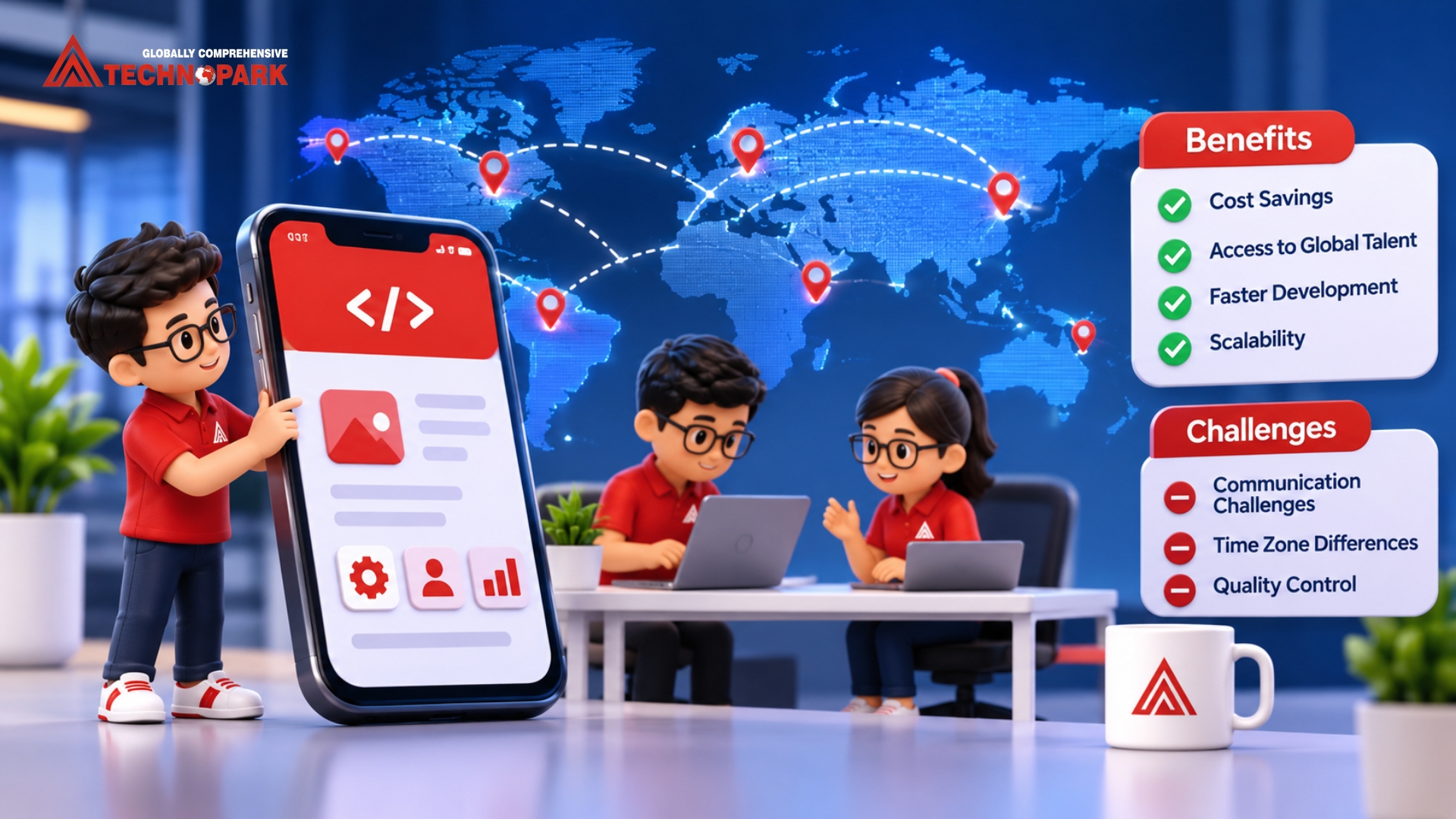
Offshore development can provide lower costs, skilled developers and flexible scaling. It can also fail when requirements are unclear, when communication is poor, or when the partner is a bad fit. It isn’t good or bad on its own. How well it works depends on how clear your project is, how ready you are to manage the relationship, and who you choose to work with.
That’s why quality, security, communication, and long-term support should count for more than price. A good partner protects your code, keeps you in the loop, and sticks around after launch.
Ready to talk it through? Book a call with a software development team to discuss your app idea and determine if you are a match for offshore development.
FAQs
1. What is offshore mobile app development?
That is, you employ a development company in some other country to build and support your app. You work together remotely, with regular meetings and milestone reviews.
2. Is it cheaper to develop a mobile app offshore than in your home country?
Often because it is expensive to hire people there. But management, extra work and delays can eat up savings, so don’t just look at hourly rates. Instead think about the total cost of the job.
3. How long does it take to develop an offshore mobile app?
complexity, feature based integration and testing. The best way to get a realistic time frame is to have a clearly defined scope.
4. How to Make Sure of Quality While Hiring Offshore App Developers?
Establish quality standards from the outset. Then count on code reviews, testing on real devices and milestone approvals so problems show up early.
5. How to select the best offshore mobile app development company?
Look at their experience, portfolio, references, communication, security, pricing transparency and after launch support. A small paid pilot can reduce your risk.