
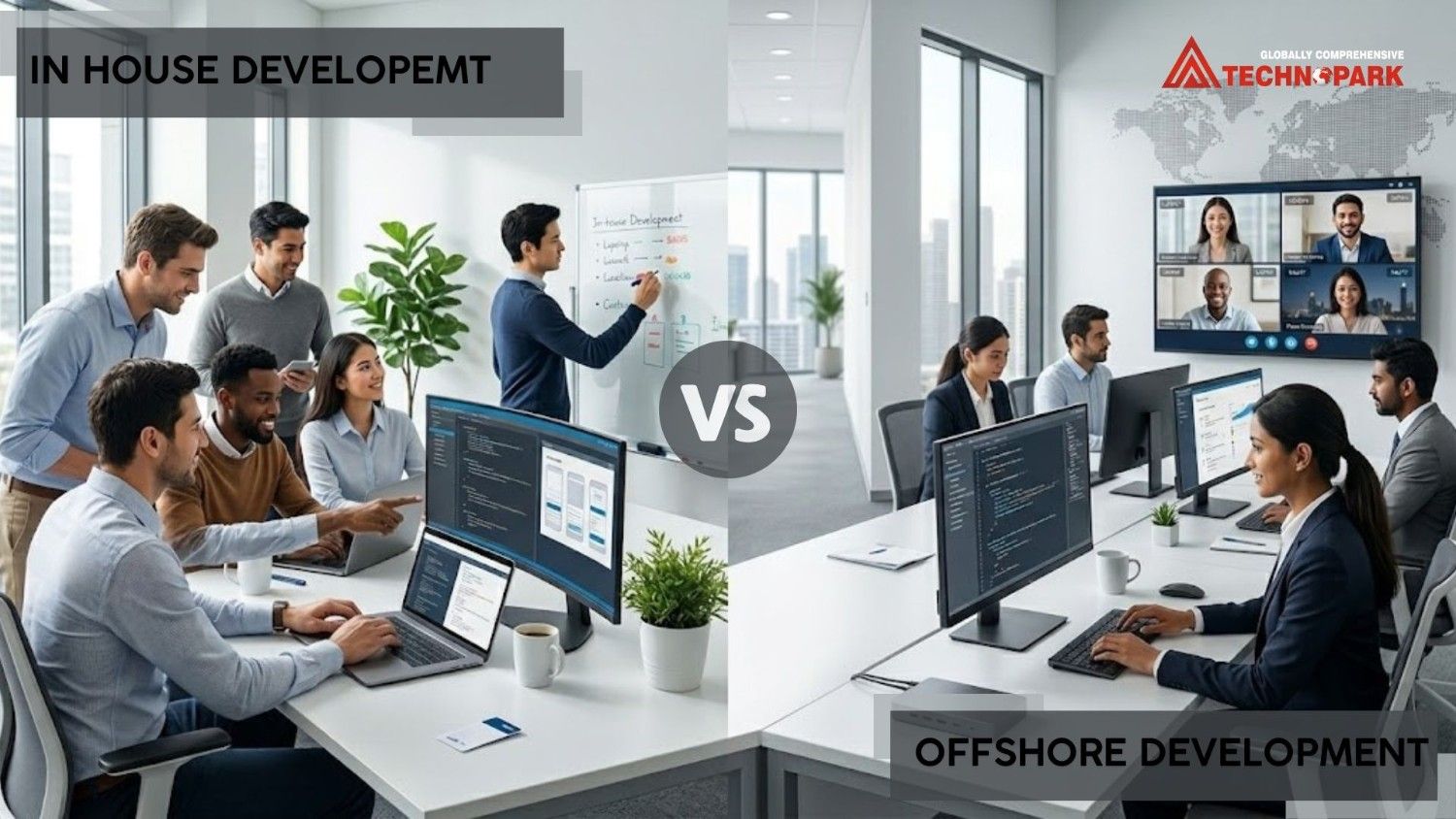
Choosing the right development model can shape how efficiently a business builds, scales, and innovates its technology. Companies today often compare in-house & offshore software development to determine which approach aligns better with their goals.
There are pros and cons with both models; so, how you choose one over the other will be determined by your needs for: flexibility; control; scalability; and the long-range plan of your business (i.e., what is needed for the project, costs associated with that project, whether you will want to be involved in development with the developers). This understanding of the differences helps executives, technologists, and operations managers make sound decisions regarding their businesses to encourage growth.
What Is In-House Development?
Definition and Key Characteristics
The term “In-House Development” refers to a group of developers who create software/solutions for an organization from inside the organization’s office. These individuals are dedicated entirely to that organization’s projects and project management structure. This model gives businesses total visibility into the development process, while allowing them to maintain complete control of priorities and timelines.
How In-House Teams Operate
Internal departments collaborate closely with in-house teams, making it easier to communicate and work together. In-house teams tend to work on longer-term projects and have a deeper knowledge of the company’s products and goals. This close alignment helps ensure consistency and quality in development work.
What Is Offshore Development?
Definition and Core Concept
Offshore Development is about working on projects that are developed in different parts of the world and are developed by multiple companies located outside of your company. With this type of offshore development, you can utilize the available global workforce for software development while simultaneously expanding the capabilities of your own organization for developing software without the requirement of putting in a large size full studio development resource in your country.
How Offshore Development Works
Digital technologies, standardized workflows, and communication platforms let offshore teams operate together. Companies can swiftly add or remove team members based on the needs of a project. With the proper partner, offshore development can give you high-quality results while yet being flexible.
Key Differences Between In-House and Offshore Development
Team Structure and Management
In-house teams are managed internally, offering direct supervision and control. Offshore teams, on the other hand, are managed remotely, often with support from external providers, which can lead to challenges in communication and coordination compared to in-house teams.
Cost Efficiency and Resource Allocation
When you do development in-house, you usually have to pay more for things like staffing, infrastructure, and continuing management. Offshore development is a better way to do things since it lowers these expenses while keeping the same level of knowledge. This is because it lets organizations take advantage of reduced labor costs and a bigger pool of talent without having to spend a lot of money on local infrastructure.
Flexibility and Scalability

It can take a while to expand an in-house staff because it takes time to hire new personnel. You can add and/or replace your offshore team quickly, which is a good thing to do if the project requirements change. This enables you to quickly respond to changing needs and make sure that resources are available when they are needed.
Communication and Collaboration
Culturally aligned and real-time communication have a positive effect on teams working in-house together. Offshore (and thus, working in different time zones) will have a greater challenge to work within cultural boundaries, so there are formalized ways of communicating such as regular video conferencing and established methods of tracking projects from a management level.
Cost Comparison of In-house & offshore software development
Hiring and Infrastructure Costs
When you create an in-house team, it will take time and money for hiring, training, having an office, and building a technological infrastructure. When using offshore development, you get teams that are ready to start work without any of this investment.
Long-Term Operational Efficiency
Over time, maintaining an in-house team can increase operational complexity, leading to higher costs and challenges in resource allocation compared to utilizing offshore development teams. Offshore models offer more flexibility in managing resources efficiently, allowing companies to quickly adjust their workforce based on project demands and market conditions.
Scaling Costs and Resource Management
Scaling in-house teams involves long hiring cycles, while offshore teams can scale faster without adding operational strain.
Benefits of In-House Development
Greater Control and Oversight
Businesses have full control over development processes, making it easier to manage priorities and ensure quality standards.
Strong Team Collaboration
The in-house development teams interact fully with the internal stakeholders to enhance teamwork, verbal communication and cooperation among various departments within the organization.
Better Alignment with Company Culture
The advantages of offshore development include greater access to a variety of skilled professionals who possess technical abilities specific to an organization’s needs.
Benefits of Offshore Development
Access to Global Talent
Offshore programmers will become part of the culture of an organization; therefore, when developing long-term projects there will be uniformity in their output.
Faster Time-to-Market
Flexible team scaling allows businesses to accelerate product development timelines and launch products sooner.
Scalability and Flexibility
Offshore teams easily adapt to changing project requirements, providing an ideal alternative for companies operating in very fast-paced, volatile business conditions – especially those businesses that must rapidly change direction due to unforeseen shifts in demand.
Challenges of Each Approach
Limitations of In-House Teams
In-house teams may face challenges in scaling quickly and adapting to sudden changes in project demand.
Risks in Offshore Development
With the aspect of offshoring a project comes the challenge of communication gaps and time zone differences. This requires the development team to implement management strategies (properly planned check-ins and collaboration tools) to stay aligned and maintain as much efficiency as possible.
When to Choose In-House Development
Projects Requiring High Control
Projects requiring oversight and collaboration are best developed in house.
Long-Term Core Product Development
Companies developing their core products use an in house team to maintain consistency and longevity.
When to Choose Offshore Development
Rapid Scaling Needs
Offshore teams are ideal for companies that want to develop their product without delays while scaling quickly.
Resource Optimization Goals
Offshore teams are a great resource for companies to optimize their resources while ensuring quality.
Expertise that is Specialists
A benefit to offshore models is the access to specialized skills, which would not otherwise be available to companies within their country.
Hybrid Model: Mixing Onshore and Offshoring
What are the advantages of a Hybrid Model
With a hybrid model, all the benefits from both options are being used simultaneously; therefore, there is greater control and greater flexibility than if only one model were being used at any given time.
How to Build a Balanced Team
Businesses can keep core functions in-house while outsourcing specific tasks to offshore teams for efficiency, such as customer service or software development, allowing them to focus on their primary objectives while benefiting from specialized expertise.
How to Choose the Right Model for Your Business
Business Goals and Strategy
Your decision is based upon which are more important to you: scalability, control or quickness.
Project Complexity and Timeline
Click here to see the full version. Projects requiring considerable time and expertise will require an internal team, while projects with shorter durations would benefit from outside teams who can generally provide less expensive options and with larger pools of talent.
Internal Capabilities and Resources
As you choose your development methods, you will want to first assess your current capabilities before proceeding.
Selecting the Right Development Model
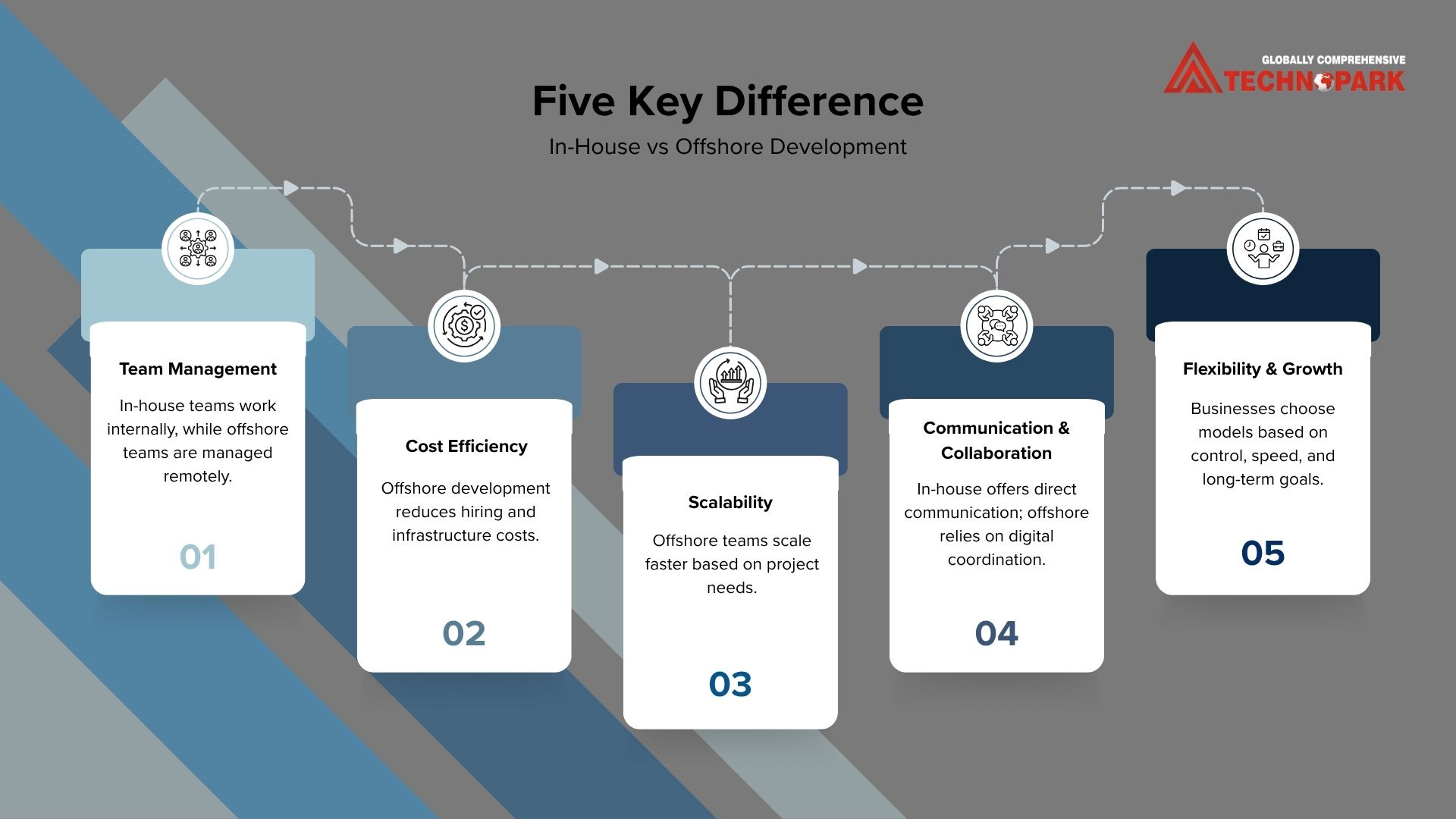
Both in-house & offshore software development models offer valuable benefits depending on business needs. The right choice depends on your goals, resources, and long-term strategy.
Developers must understand the benefits and drawbacks of each business model in order to develop and implement effective strategies that will enable their businesses to expand or innovate as necessary. The development plan of a company must be consistent with the rest of the overall company plan, regardless of whether it is developed internally, externally, or both.
FAQs
1. What distinguishes in-house and offshore development?
Internal teams work at a company’s offices, whereas offshore teams work remotely.
2. Which model is more flexible?
Offshore development offers greater flexibility for scaling teams quickly.
3.Can offshore development be trusted?
It can deliver high-quality solutions with the right partner and methodology, clear communication, specified expectations, and a sound project management structure.
4. When should I choose in-house development?
Choose in-house for projects requiring high control and long-term involvement, such as those that demand close collaboration with stakeholders and ongoing maintenance and updates.
5. Can firms combine models?
Yes, many companies employ hybrid models for efficiency and flexibility.