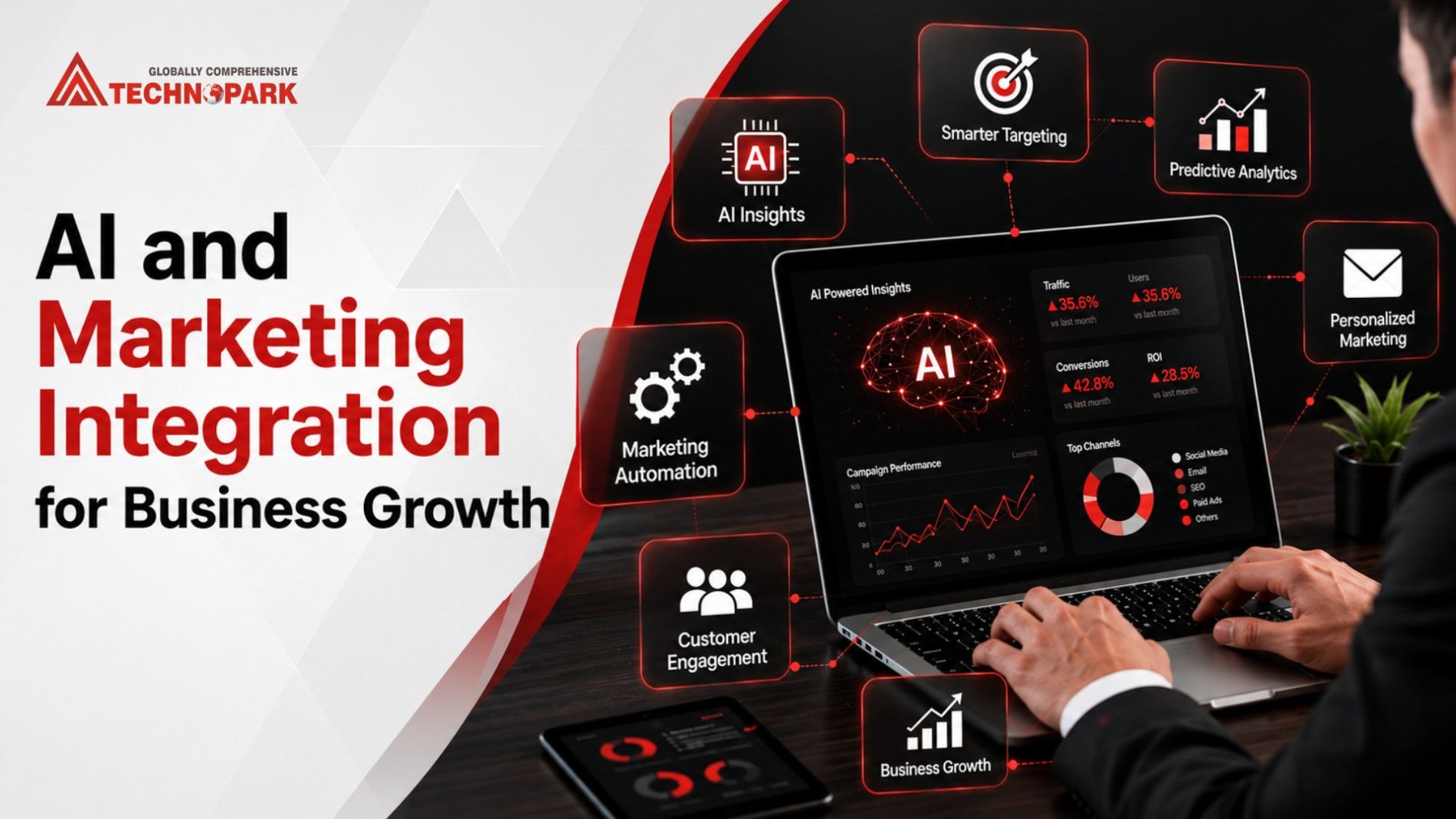
Marketing has changed faster in the last five years than it did in the fifty before that. Customers now expect personal experiences. Budgets are tighter. Rivals keep getting tougher. This is exactly where AI and marketing integration comes in. Instead, of making you work harder, it makes you work smarter. Are you a business owner or marketer trying to keep up? You’re in the right place.
What Is AI and Marketing Integration?
We call this the “marriage of AI and marketing” – the implementation of AI tools within your present marketing infrastructure. It automates routine work and digs through customer data. It also personalizes campaigns without you lifting a finger for every message. The payoff is real. You save time, cut costs, and get better results across every channel.
Why AI and Marketing Integration Matters for Business Growth
Customers today want fast, relevant, and personal experiences, and honestly, manual marketing just can’t keep up anymore. AI changes that equation. For example, it can analyze huge amounts of data in seconds and catch patterns a person would probably miss. That translates into sharper decisions and campaigns that really land. Firms that jump on AI early tend to gain a real edge. As a result, they react faster to trends. They understand customers better. And they put the budget where it counts most. This matters even more for startups and small firms. AI helps level the field against bigger rivals with deeper pockets and larger teams.
Key Benefits of AI and Marketing Integration
Bringing AI into your marketing operation pays off in some pretty clear ways.
- More intimate contact.
>>>>>>>>>>AI looks at buyer behavior and serves up material that is highly relevant, which over time leads to greater engagement and deeper relationships. - Better customer segmentation
>>>>>>>>>>AI sorts clients by demographics, surfing patterns and purchase history so your messaging actually fits instead of one generic campaign for all. - Intelligent predictions.
>>>>>>>>>>AI predicts future buying habits, long-term client value and churn risk, so your team can act before the opportunity is lost. - Automation of repetitive tasks
like sending emails and generating reports can free up time for the things that really matter. After this your team can focus on strategy development. - Higher ROI.
AI tools adjust ad spend in real time, cutting waste and squeezing more return out of every campaign you run.
Common Challenges in AI Marketing Integration
AI adoption isn’t all smooth sailing, so it helps to know what’s coming.
- Data quality trips up a lot of firms. AI needs clean, tidy data to work well. Messy data only produces messy results.
- However, budget can also slow things down, since some tools ask for money up front and a chunk of training time before they pay off.
- In addition, team pushback is another real hurdle. People worry about job security. Others just feel overwhelmed by new tech.
Finally, there’s integration complexity. Getting AI tools to talk to your current systems takes real planning and, often, tech help.
Traditional Marketing vs AI Marketing
Here’s a side-by-side look at how traditional methods stack up against AI-driven marketing.
| Factor |
Traditional Marketing |
AI Marketing |
|
Data Analysis |
Manual and time-consuming |
Automated and real-time |
|
Personal touch |
Broad, generic messaging |
Content made just for them |
|
Decision Speed |
Slower, based on past reports |
Faster, based on live data |
| Cost Efficiency |
Higher labor costs |
Lower long-term costs |
| Scalability | Limited by team size |
Easily scalable |
|
Customer Insights |
Surface-level trends |
Deep behavioural patterns |
This comparison is a big part of why so many firms are shifting toward AI-powered strategies.
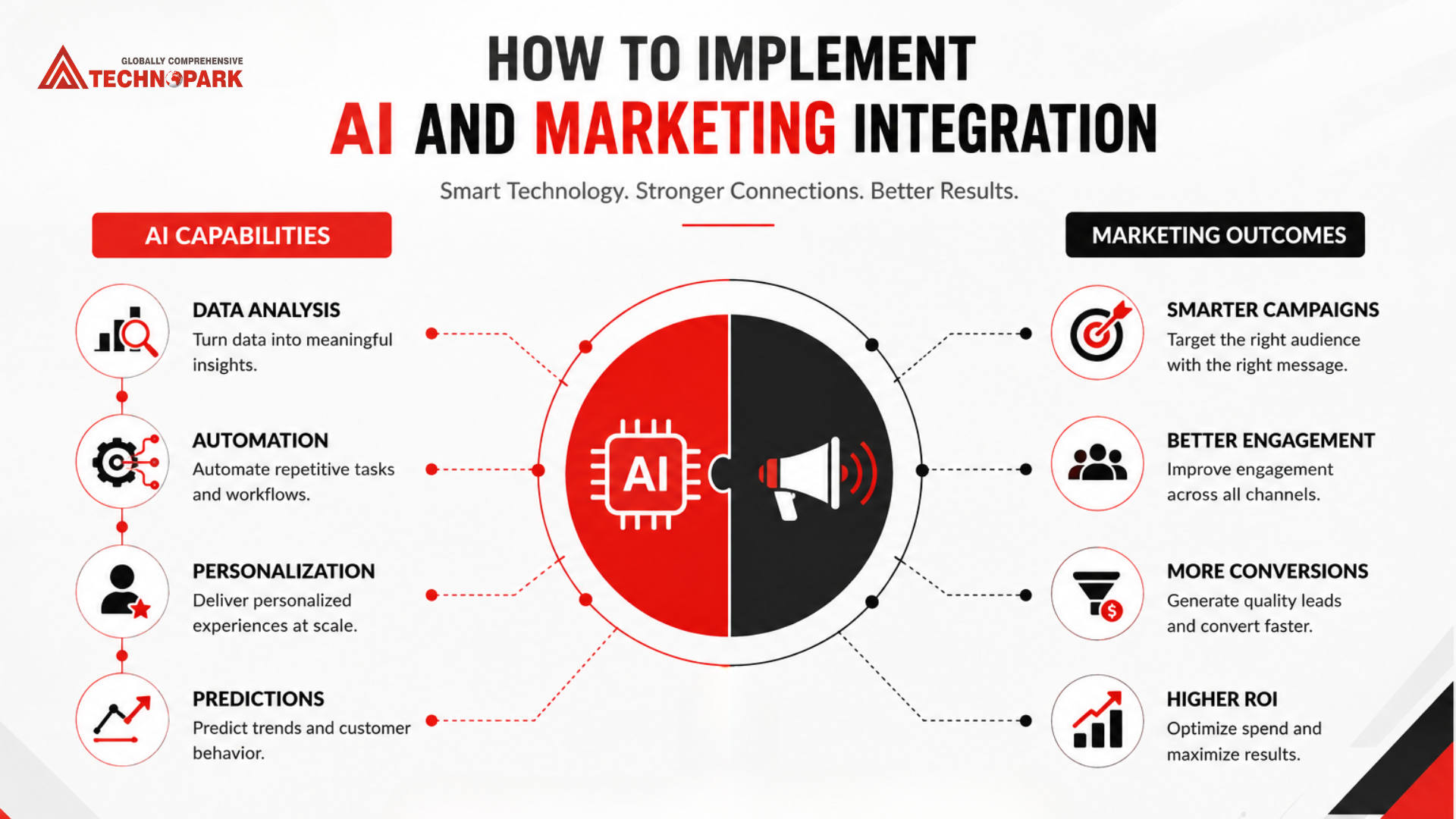
How to Implement AI and Marketing Integration
Rolling out AI successfully really comes down to following a clear process.
Choose the right AI marketing tools. “Figure out what your biggest marketing headaches are, and then find tools that solve those problems,” he says. Popular options include HubSpot, Salesforce Einstein and Jasper AI. Just make sure whatever you pick will connect right into your existing system.
Align AI with your marketing objectives. AI should be an enhancement to what you’re already doing, not a replacement. Get clear on your goals first. If lead generation is your priority, for instance, look for tools built just for that.
Train your team. Technology alone won’t get you there. Your team needs real training to use these tools well. Trust and less pushback are built through workshops, tutorials and continuing support.
Top AI Tools for Marketing Integration
- HubSpot AI bundles content generation, lead scoring, and workflow automation into a single platform.
- With Salesforce Einstein, you can make predictions and learn useful things about your customers.
- The Jasper AI helps teams write fast marketing copy that is still good.
- Google Performance Max uses machine learning to fine-tune ad campaigns on its own.
- AI chatbots keep support running and capture leads around the clock, even while your team sleeps.
Business Applications and Marketing Use Cases
AI shows up across nearly every corner of the business these days. Chatbots and virtual assistants autonomously answer common queries, recommend items and qualify leads, lowering response times dramatically. Social listening solutions watch what’s being said about your brand across channels, alerting you to shifts in sentiment and brand concerns in real time so your team can step in before tiny problems become big ones. Email marketing gets a boost, too, with AI handling subject lines, smart grouping and determining the optimum time to push send. E-commerce businesses lean on AI for personal product suggestions, which tends to push up average order value and keep buyers happier.
Best Practices for AI Marketing Success
First, start small. Then, test one AI tool before you try to scale it across your whole marketing stack. Keep people in the loop. AI should support creativity, not steamroll it entirely. In addition, check your performance data often. That is how you spot flaws early, and continually improve your approach. Prioritize data privacy. Implementing laws such as GDPR helps maintain consumer faith.
Common Mistakes to Avoid
- Don’t trust AI without a human in the loop. Always check the results before launching anything into the market.
- Don’t ignore data quality problems. Bad data leads straight to bad predictions and wasted budgets.
- Don’t skip staff training. Teams that aren’t trained well tend to leave powerful features on the table, unused.
- And don’t pick tools just because they’re trendy. Match whatever you choose to your actual business needs.
Measuring ROI of AI Marketing Integration
How can you know if your AI investment is actually paying off? You track the ROI. First, set some clear KPIs. Look at some common measures like cost per lead, conversion rate and long term client value. Here are some stats before and after you brought AI onboard. Utilize the integrated analytics dashboards to remain on top of things. Finally, take time every quarter to measure how you’re doing, and then change what you’re doing based on the evidence you have, not your gut.
Future of AI and Marketing
The AI for marketing space is constantly evolving, and the leveraging of real-time data to craft hyper-personal experiences will only become more advanced. In addition, conversational AI will keep growing. More client conversations will be handled naturally by voice assistants and better chatbots. Furthermore, predictive customer service will become more common. AI will spot needs early, before a consumer even reaches out. Therefore, AI writing tools will keep pushing content creation to be faster and better across every channel you use.
People Also Ask
Is AI replacing marketers?
No. AI takes care of routine tasks, while human creativity and strategy stay key to really winning.
How much does AI marketing integration cost?
Costs vary a lot based on the tools and your business size, though plenty of platforms offer pricing that scales for startups and enterprises alike.
Can small businesses use AI marketing tools?
Yes. There are plenty of affordable AI tools built specifically with small businesses and growing startups in mind.
What skills do marketers need for AI integration?
Marketers benefit from some data literacy, a working knowledge of AI tools, and solid clear thinking.
AI Marketing Made Simple
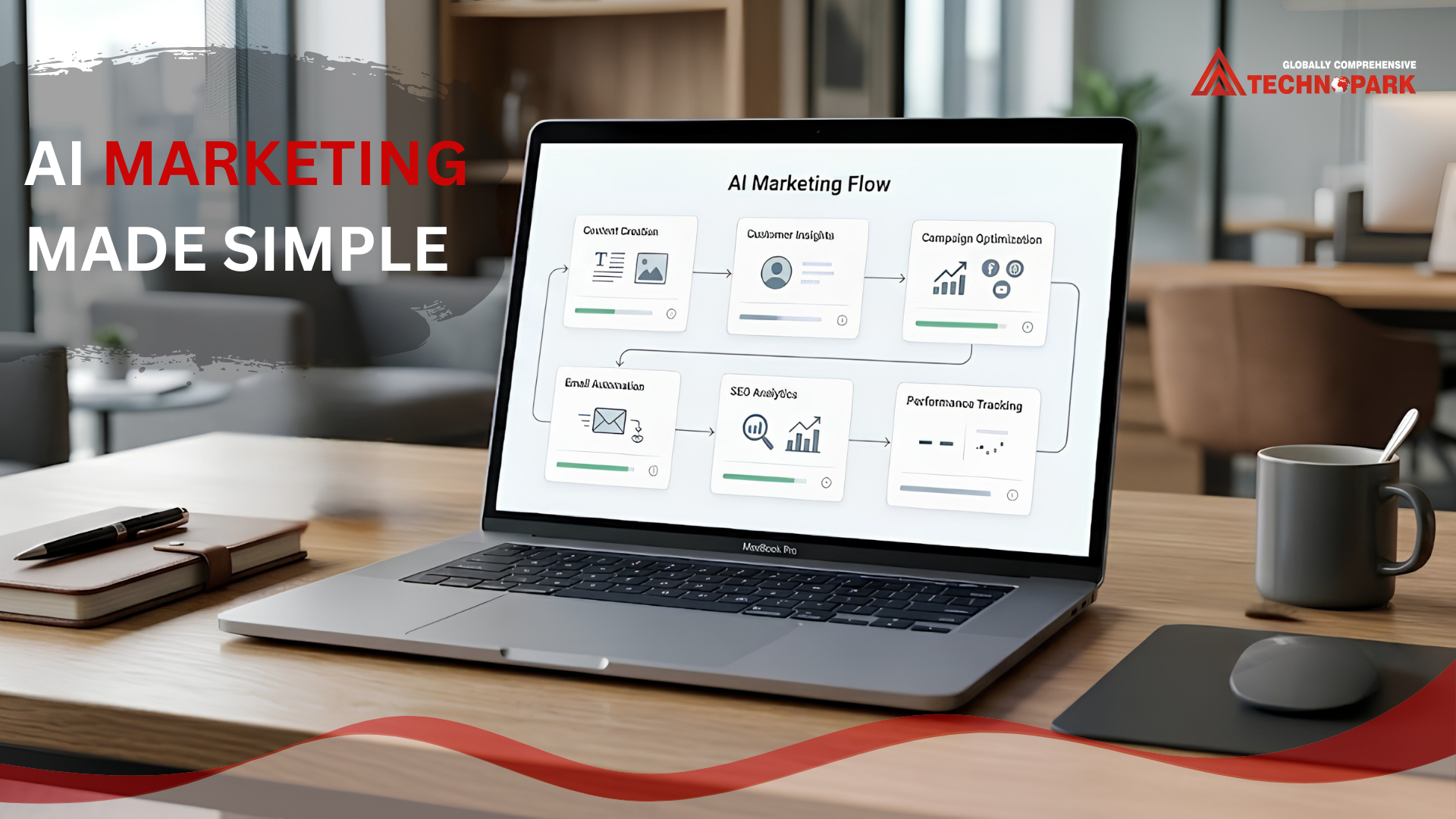
AI and marketing integration is no longer optional for businesses that want to keep growing. It sharpens speed, personalizes the customer experience, and lifts ROI in ways manual methods just can’t match. Do a little, use the right tools, and train your team well. Therefore, Keep track of your results as you go, and modify your strategy as you learn what works. The companies who deploy AI today will be the leaders of their industries tomorrow. Ready to get smarter? Start your AI marketing journey now.
FAQs
1. What is AI and marketing integration?
The process refers to bringing together artificial intelligence tools with your advertising formats. automates processes, monitors information, and tailors marketing messages allowing you to cut costs and provide the most suitable experience by means of different platforms such as social networks and emails.
2. Why should businesses invest in AI marketing?
Marketing Intelligence increases efficiency and saves valuable time. Marketing Artificial Intelligence performs data analysis quicker than any human can and identifies patterns that contribute to successful promotional campaigns. However, Companies, which use Marketing AI early, experience the benefits of stronger connections with customers and better personalization.
3. What are the finest AI marketing tools?
Performance Max. There are different options to choose from such as tools for content generation and forecasting tools; therefore, it is important to select one that will satisfy both your objectives and budgetary constraints.
4. How much does AI marketing cost for startups?
IIn action. Most of the AI marketing solutions are either free to try or demand a nominal cost per month. New initiatives can begin with one tool, and availability can be added as need and funding allow.
5. How do I measure AI marketing ROI?
You should be monitoring things like cost per lead, conversion rate, lifetime value of the customer, and comparing data before and after you adopt. Regular reviews allow you to see what’s working, and what needs altering.