

A company’s long-term success is based on several components like the speed of their ability to provide assistance to customers, the level at which their services can be communicated to customers and how effective and efficient they operate. As a result, for companies that require dependable remote support and do not wish to have any additional administrative tasks created by the use of virtual assistants, this type of service is becoming increasingly vital to their business.
Virtual assistants are a vital resource to help provide daily operational assistance to help companies by doing everything from helping businesses communicate with clients, setting appointments and assisting with social media, and providing other day to day operational support. Nowadays all industries from health care, to technology, banking, telecom companies, real estate and so on will increasingly utilise virtual assistants since they are all looking for ways to remain busy and provide quality service to their customers. Virtual support services will help all companies stay organised, respond timely, and continue to expand. This is mostly because of how fast-paced and always-changing today’s company service-oriented environment is. This means that companies need open vendor partnerships to offer solutions that can quickly adapt to changes in business operations and customer needs.
What Is Virtual Assistance?
Virtual aid services help businesses in many fields with their administrative, operational, and customer service needs. These services are provided by trained professionals who work from home but are still fully connected to the company’s communication and work processes.
Managing repetitive chores, communicating with customers, making schedules, and coordinating digital tasks are all things that businesses hire virtual assistants to do. This lets people inside the company focus on long-term goals, making operations better, and building relationships with customers. In the past few years, virtual help has changed a lot and is now an important part of doing business all over the world.
How Remote Support Teams Operate
For smooth business help, remote support teams use cloud-based platforms, communication tools, and workflow management systems. Virtual Assistance Services for Business follow the rules set by the company and stay in touch with management teams and departments inside the business.
Through CRM systems, project management software, and scheduling platforms, most companies make it easy for remote support teams to work with them every day. This ensures that collaborating with each other is easy to accomplish and that we can produce high output as well as have high operating visibility at the same time. Businesses will find it possible to operate much more efficiently and flexibly due to their virtual assistance services, which provide them with increased opportunity to manage an increasing amount of remote operations.
Core Virtual Assistance Services for Businesses
Virtual Receptionist Services
Daily, businesses rely on virtual receptionists to manage incoming phone calls; respond to customer inquiries; schedule appointments; and communicate in a professional manner with their customers. Virtual receptionists are responsible for creating a positive first impression of your business while also ensuring that your customers get the assistance they require quickly and professionally.
The services provided by virtual receptionists will help businesses to keep their communication channels organized and improve the number of calls that are answered and the number of scheduling conflicts that occur. For businesses, this results in improved responsiveness and enhanced engagement with customers throughout all departments of the business.
Inbound Customer Support
Inbound customer support virtual assistants answer questions, fix problems, and quickly give customers correct information about services. The following edits will ensure that we have quick responses to our customers while still maintaining a level of professionalism during each customer engagement.
Having effective inbound assistance enhances your customers’ level of satisfaction; at the same time, this will allow an organisation to handle its growing volume of communications more efficiently. On top of that, improving efficiencies with better inbound support builds improved relationships with customers and increases overall operational consistency.
Appointment Setter Services
Virtual Assistant Appointment Setting offers scheduling help to clients by coordinating meetings with other people, keeping a company’s calendar updated, and processing future appointment confirmations through an ongoing communication process with the client’s potential and current customers.
The provision of this type of service allows for greater efficiency within an organization by reducing errors created due to scheduling conflicts as well as providing a clear customer engagement structure every time a client engages with potential or current customers. As a result, businesses have the ability to concentrate their efforts toward closing business opportunities and building stronger client relationships.
Social Media Marketing Support
Social media marketing virtual assistants manage content scheduling, audience engagement, and online brand communication across digital platforms. They help businesses maintain active online visibility while supporting marketing campaigns and customer interactions effectively.
Ongoing management of social media platforms allows for consistent brand recognition as well as increased engagement with customers in a variety of online marketplaces. Businesses and their users are continuously connected to each other allowing businesses to gain better visibility into their customer’s interests and current marketplace trends through their ongoing social engagement.
How Virtual Assistance Works Across Industries

Healthcare Industry
Healthcare organizations use virtual assistants for patient scheduling, follow-up coordination, and administrative communication management responsibilities. Virtual support teams help maintain organized workflows while improving communication between healthcare providers and patients. These services lessen administrative burden on healthcare professionals and improve patient scheduling and operational coordination.
Technology Industry
Virtual Assistance Services for Business (VAs) provide remote administration, workflow management and customer support to Tech Companies. VAs help to manage communications or maintain operational efficiency amongst technical teams working in a distributed environment. VAs support productivity by enabling Technical Teams to concentrate on developing new products and/or developing software.
Telecommunication Industry
Telecoms are using virtual assistants to efficiently handle customer queries, ticket management and service coordination operations. Remote support teams help to keep communication organized and improve the efficiency of responses for customer service operations. Good virtual assistance is helping the telecommunication companies to get close to their customers and keep the operation steady.
Banking and Financial Services
Banking and financial organizations use virtual assistants for appointment scheduling, document coordination, and client communication support tasks.Virtual Assistance Services for Business help financial institutions maintain organized operations while improving customer engagement processes. The services also support workflow efficiency by reducing administrative workloads within highly regulated operational environments.
Real Estate Industry
Real estate businesses use virtual assistants for lead management, appointment coordination, customer follow-ups, and listing management activities. VSA represents an excellent opportunity for real estate companies to remain connected and organized with their existing customers and prospects and to communicate with them effectively. Your team can run your business well with VSA, which lets you sell homes and build ties with your customers at the same time!
Benefits of Virtual Assistance for Modern Businesses
Improved Productivity and Workflow Efficiency
Enabling companies to have access to service providers that provide virtual assistance services for business allows companies to outsource their daily administrative (or operational) tasks to third parties (such as; daily, weekly correspondence, scheduling, and/or organizing the appointment calendar). A company working with a virtual assistant will see an increased productivity of their team by allowing them to focus on strategy (rather than everyday operations).
Better Customer Communication
Professional virtual assistants ensure customer inquiries are handled promptly, improving responsiveness and overall customer satisfaction significantly. Businesses can establish consistent standards for communication which provide customers with a stronger sense of trust in doing business with them over time.
Scalable Business Support
A virtual assistant service allows businesses to have a flexible staffing model. This results in greater adaptability to increased workloads or changes to existing ones. Without disrupting existing processes or structures, companies will quickly be able to grow their virtual assistance services.
Reduced Administrative Burden
By using virtual assistants to manage administrative tasks like scheduling, communicating, and coordinating, many administrative tasks can replace important time that could have been used to support growth and innovation in operations.
Why Businesses Are Adopting Virtual Assistance
Growth of Remote Operations
The trend of remote workplaces growing rapidly throughout many industries has created a rise in the need for flexible and digitally connected support solutions. Virtual assistance services fit very well within the modern remote operating structures of operating a business in a distributed work environment.
Demand for Faster Customer Support
Across all industries and digital channels, customers have higher than ever before expectations about receiving rapid feedback/data along with dependable communication from organizations. Organizations can uphold a consistent standard of responsiveness by way of utilizing virtual support teams in order to enhance the total output and overall interaction a customer has with an organization.
Need for Flexible Business Operations
Businesses require adaptable operational models capable of responding quickly to changing demands and growth opportunities effectively. Services for virtual assistance come with an aspect of being more adaptable, with no constraints of working through a conventional organisation’s infrastructure.
Future of Virtual Assistance Services
AI and Automation Integration
Technological advances in artificial intelligence (AI) and automation have had a significant impact on traditional methods of delivering virtual assistance to businesses today. By using artificial intelligence-based systems, virtual assistants can now improve their productivity by reducing the time spent on repetitive tasks and streamlining their business processes.
Cloud-Based Collaboration Tools
Cloud systems make it easy for virtual support teams to work together with businesses, no matter where they are located or how they are set up. These tools help people in remote work settings communicate better, keep track of tasks, and see what’s going on in the workflow.
Data-Driven Customer Support
Analytics and customer insights are being utilized more often by businesses in order to continually improve their communication strategies and customer support experiences. In addition, virtual assistance services that use data-driven systems are enabling companies to provide their customers with more personalized and effective communication.
Virtual Support for Business Growth
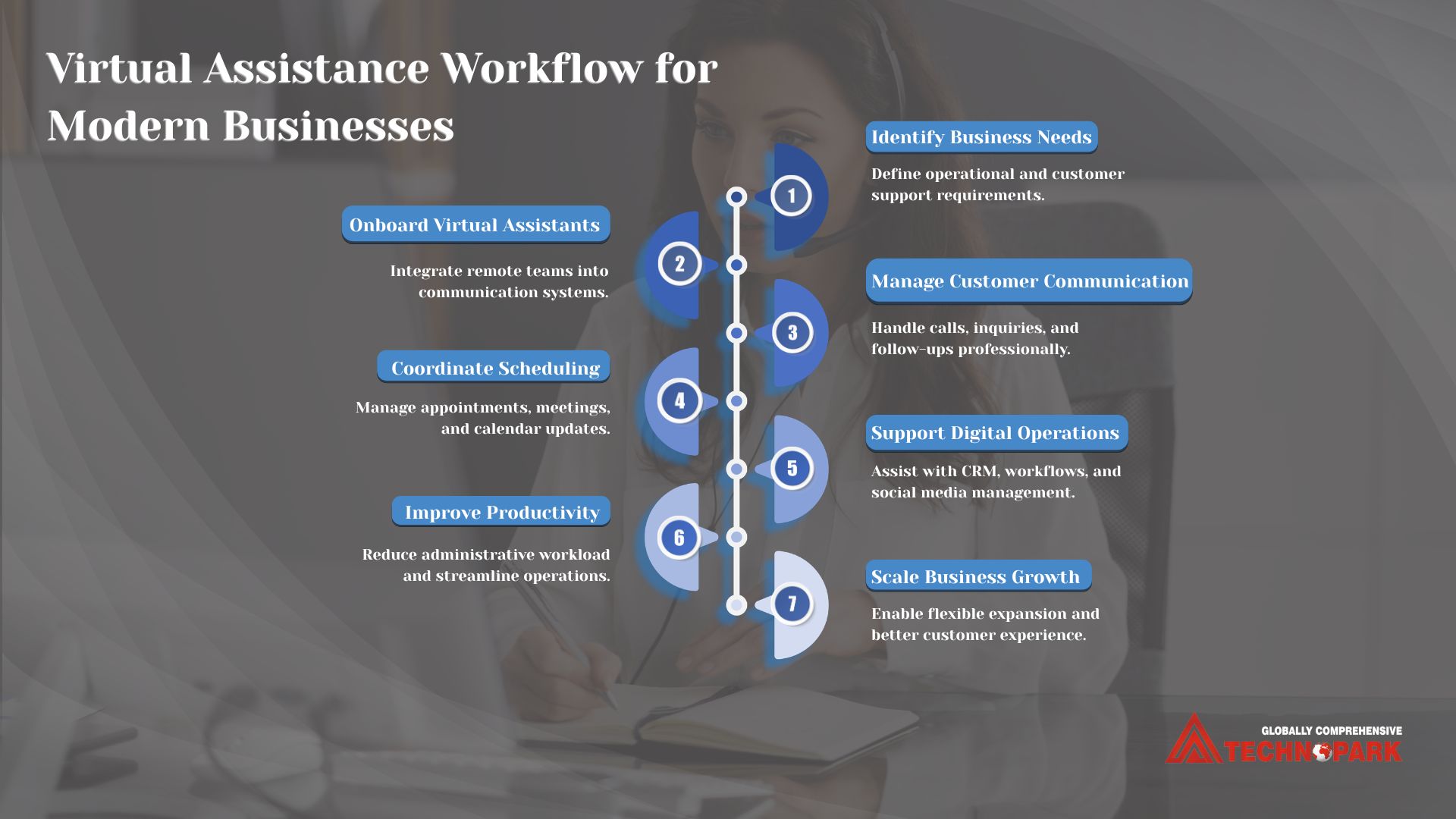
All businesses need assistance from a physical presence, especially in the areas of flexibility, scalability, and efficiency when working with anyone in any industry. Virtual support providers offer many different types of services to help improve the productivity of their customers. Some examples are receptionists based on virtual platforms, inbound/outbound support representatives (such as telemarketers), appointment setters, or even virtual assistants handling social media accounts; all of these services have a tremendous positive impact on customer communication and productivity.
Virtual support providers across the following business sectors are currently utilizing these solutions are healthcare, technology, banking, telecommunications, and real estate sectors; they are using them as a way to enhance their operations while helping grow their business. Virtual support services will continue to play a crucial role as more businesses are expanding their remote workforces and having more digitally intelligent processes. Businesses can benefit greatly from finding and developing long-lasting relationships with reputable virtual assistance companies that provide reliable remote operational support. With the right virtual assistance provider, businesses streamline their processes and provide excellent customer service; therefore, businesses will be able to focus their time and energy on achieving long-term growth strategies.