Healthcare organizations need more and more structured ways to talk to each other so they can meet patients’ needs quickly and well. A good appointment setter makes sure that everything goes smoothly, that patients follow the rules, and that they have a good time. This job is a good example of how operations managers and virtual assistants can use strategic operational leverage. Setting up appointments from a distance has changed how healthcare works in both decentralized and technology-driven service models. Companies that want to grow in a smart and responsible way need to know how this works.
The Appointment Setter in Healthcare
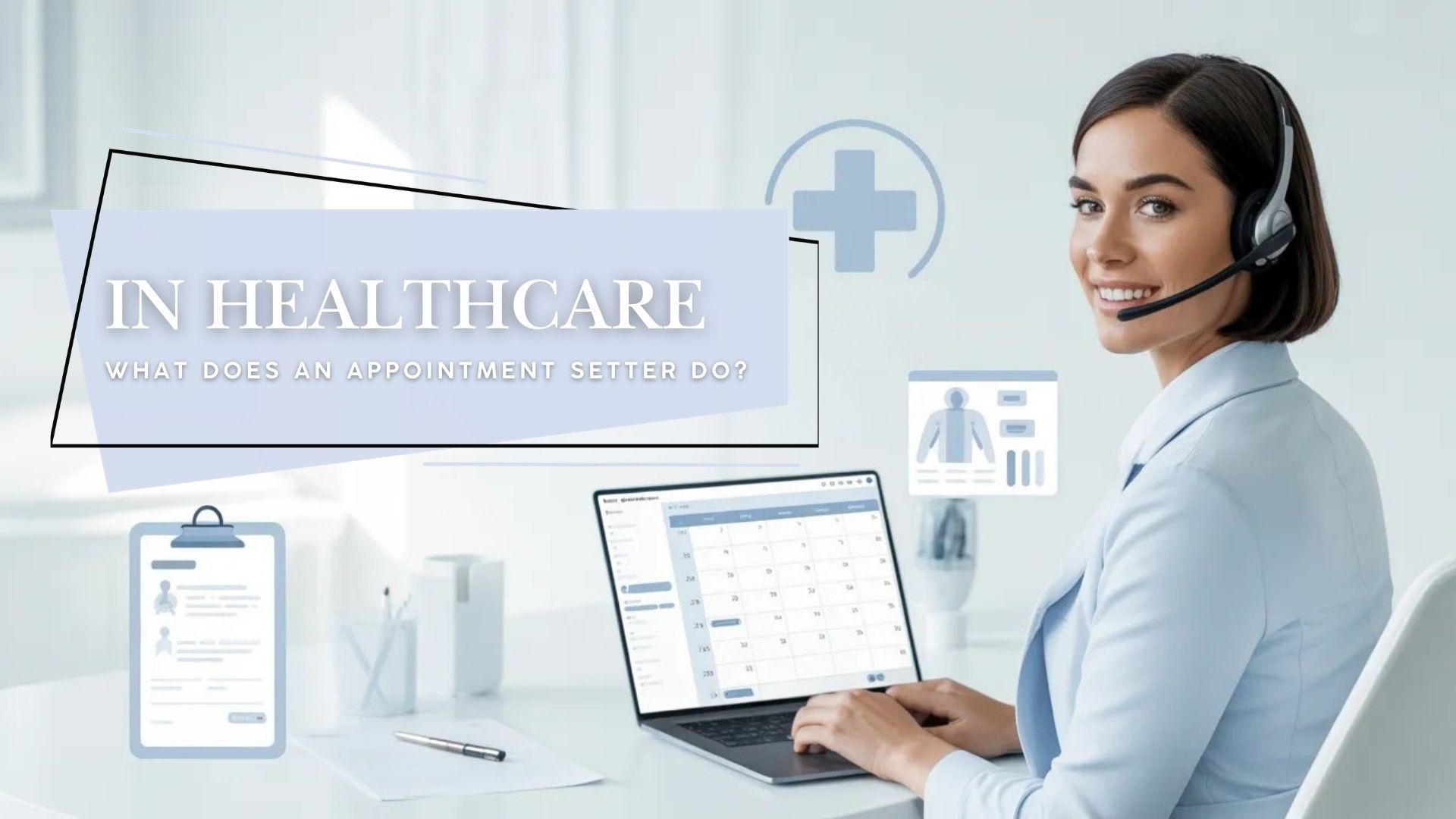
In the healthcare field, a patient appointment setter makes sure that patients can see their doctors and other healthcare providers. The job is more than just making appointments; it also includes helping with administrative tasks and managing communication. Healthcare providers use structured scheduling to avoid delays in service and operational bottlenecks. Appointment setters make sure that calendars are optimized while also following all rules and regulations. A lot of the time, their jobs have to do with technology systems, ways to make patients happy, and following the rules.
Why healthcare companies need appointment setters
Healthcare systems function in delicate patient service settings with tight deadlines. The administrative burden on front desk and clinical teams is lessened by appointment setters. As a result, scheduling workflow management makes sure that all departments work together smoothly. In addition to this, virtual support teams can do these things from a distance and have secure access to the system. This remote structure can grow without losing its ability to work with others.
Daily Responsibilities in Medical Appointment Coordination
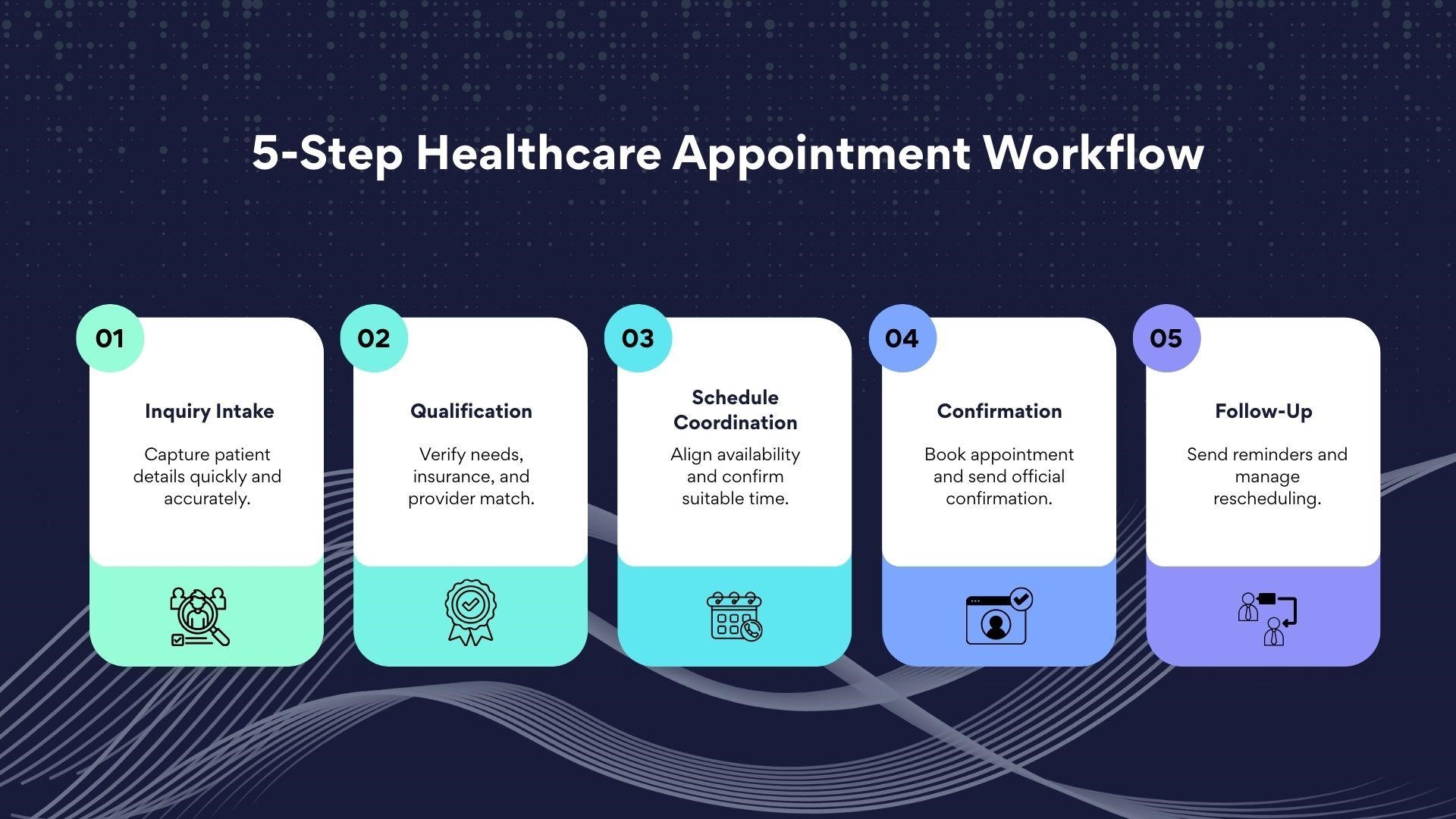
Each day, appointment setters take inbound calls and emails, plus web forms from those looking to book an appointment. There’s a variety of appointment processes, from confirming to changing to following up on open appointments, that you can handle via phone or text. There are regular updates to EHR platforms to maintain the security of patient information. Prior to scheduling, the patient’s insurance and personal information are checked. Throughout the entire appointment process, including new appointments, following compliance procedures ensures that private medical records are protected.
Managing Scheduling Systems and EHR Platforms
Modern healthcare scheduling relies on integrated CRM and EHR platforms. These systems help appointment setters make sure that providers are free when patients need them. We try to fix calendar conflicts before they happen so that we don’t have to deal with problems like double bookings. People can remember their appointments much better if they set up automatic reminders. Properly documented procedures provide clear documentation for managers working remotely so that everything is clearly understood.
Patient Data Verification and Compliance
Patient information must be protected by laws governing health care. The process for setting appointments includes looking at identification, verifying the identification matches the provider, verifying insurance and confirming the patient meets referral requirements. All of these tasks are completed while adhering to the currently accepted HIPAA standards for information security. Documentation accuracy directly impacts billing workflows and compliance reporting. Operational risks are minimized when standardized verification protocols are consistently applied.
Strategic Value for Virtual Assistance Providers

Service firms provide appointment-setting services. Managers working remotely have the benefit of an efficient and systematic process for scheduling healthcare appointments. Technology-driven appointment setting supports distributed healthcare networks effectively. Administrative overhead is reduced without sacrificing service reliability. Thus, they are creating more resilient operations across the Healthcare Industry.
Enhancing Workflow Automation Through Technology
All of these automation tools are valued as ways to simplify and streamline recurring scheduling activities. Artificial Intelligence will assist us by autonomously synchronizing our calendars and dispatching reminder notifications. Data dashboards will furnish us with individual booking performance and attendance metrics, together with comprehensive reports derived from all system data. Centralized monitoring solutions facilitate the rapid identification of workflow bottlenecks. Technological innovators are persistently enhancing and optimizing digital coordination ecosystems.
Improving Efficiency in Logistics and Transport Healthcare Services
- Healthcare logistics and patient transport services rely heavily on precise scheduling coordination.
- Appointment setters synchronize medical visits with transport availability and routing timelines.
- Delays are reduced when communication flows seamlessly between departments.
- Corporate decision-makers gain improved forecasting through accurate scheduling data.
- Operational stability increases across multi-location healthcare environments.
Technologies and Competencies That Promote Success
It’s always clear that someone is good at making meetings and understanding other people. When people can easily talk to their doctors, they feel more at ease as they go through the healthcare system. It is essential to have prior experience with automation software, electronic health records, and customer relationship management (CRM). It is still critical to know how to secure data in regulated healthcare environments. Expert instruction ensures that all teams, no matter how far away, perform to the same standard.
Identifying the state of affairs and how it impacts operations
Important metrics include confirmation rates, no-show rates, and response times. With data-driven reporting dashboards, remote supervisors can observe their teams’ productivity levels. If you want more precise tracking of billing and compliance, you need to keep records that are consistent. Therefore, When scheduling methods are clear and simple, everything runs more smoothly. It aids in maintaining provider and patient satisfaction in the long term.
Future Trends in Healthcare Appointment Setting
AI changes all the time, and these changes are affecting health care plans more and more. There are chatbots and programs in some places that automatically sort people. Models for working from home are still used by international health care networks. When clinical tasks are done in a decentralized way, scalable virtual assistance systems can help quickly and effectively. We need to find a balance between automated and person-centered conversation if we want to grow in the future.
Appointment setters are critical to the operational performance of the healthcare sector. Their efforts ensure uniform patient communication across systems, coordination, and adherence. For virtual assistants, this position reflects strategic industry positioning. Consequently, Remote operations managers benefit from measurable and structured workflow outcomes. As healthcare evolves, appointment scheduling will remain essential in ecosystems of technology-enabled services.
FAQs
1. What is the function of an appointment setter in the healthcare sector?
Coordinates patient appointments, verifies information, and ensures the accuracy of system records.
2. Can appointment setters work remotely?
Indeed, secure platforms facilitate remote healthcare scheduling activities.
3. What competencies are required for appointment setting?
Proficient communication skills, system utilization, and awareness of regulations are essential.
4. How does technology help schedule appointments?
Automation reduces manual tasks and improves scheduling accuracy.
5. Why are appointment setters important in healthcare?
They improve efficiency, reduce no-shows, and support operational continuity.